We enable smart irrigation of green spaces!
Measure. Understand. Act.
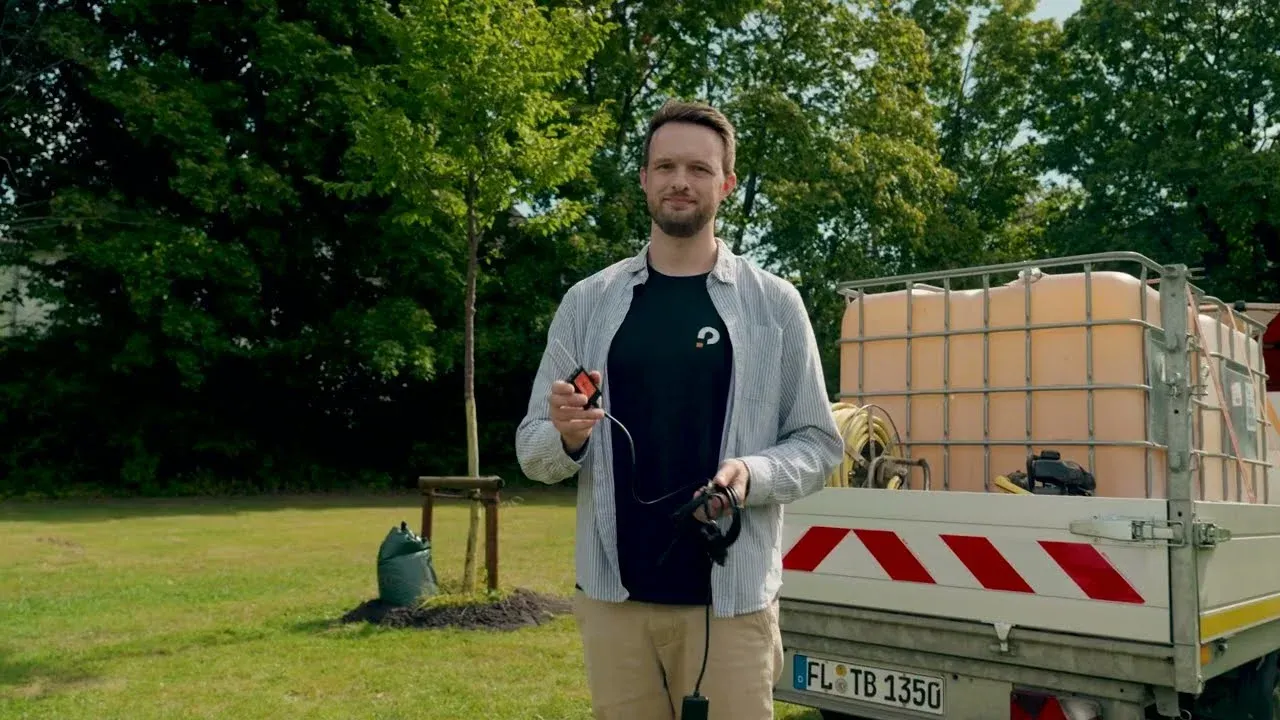
Sensors in the soil show which trees need water, and route planning sends your team straight there. Irrigation is only the beginning.
Measure. Understand. Act.
Sensors in the soil show which trees need water, and route planning sends your team straight there. Irrigation is only the beginning.

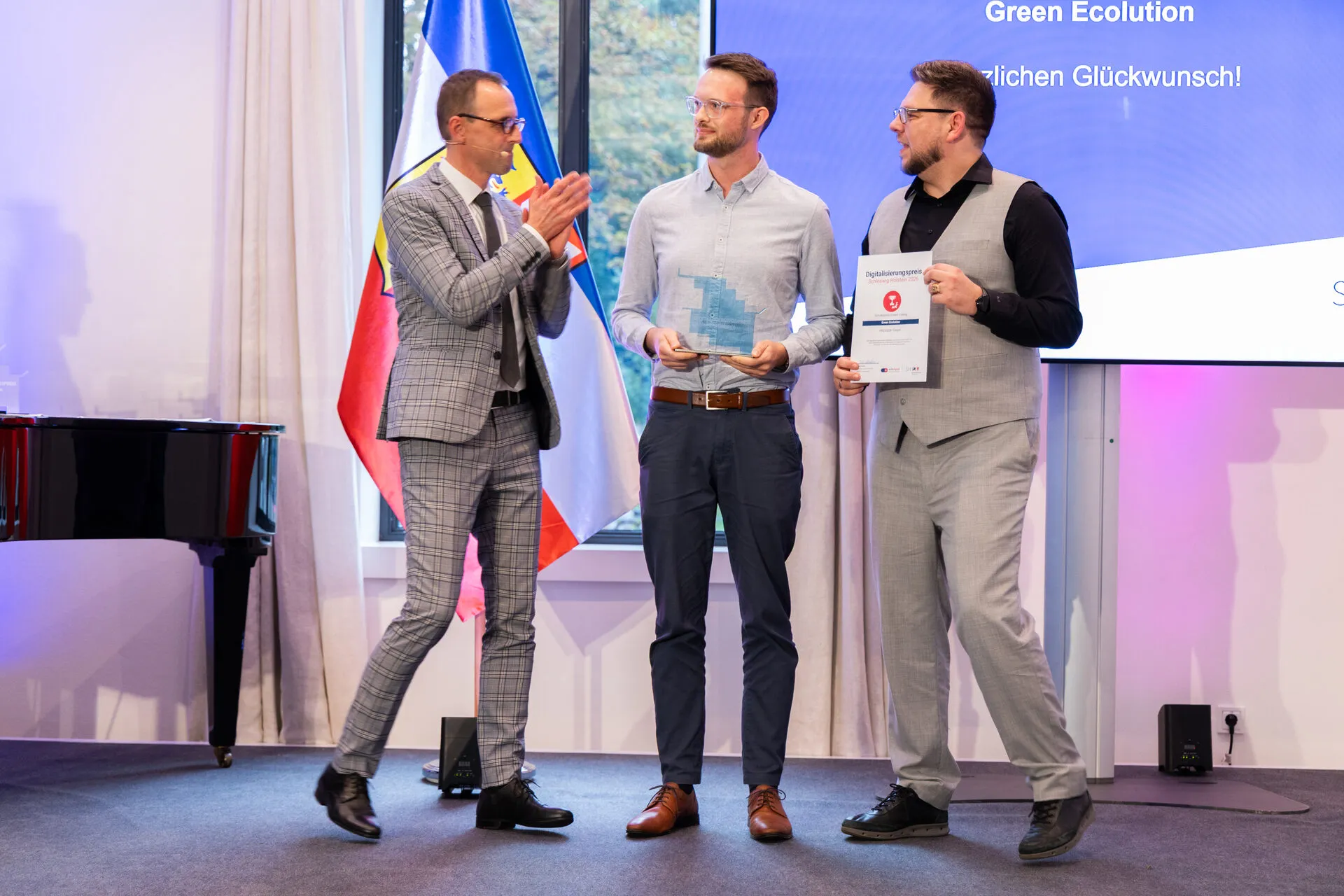
Green Coding special prize
In September 2026 the state of Schleswig-Holstein honoured Green Ecolution for resource-efficient software and demand-based irrigation. Digital minister Dirk Schrödter presented the prize in Kiel.
Read about the award ceremonyGreen Ecolution combines three steps into one platform. Sensors measure what is happening on site, the software turns that into a situation overview, and operations planning converts it into tours. We started with the irrigation of urban trees, and the platform is designed for further tasks.
Cities water by feel.
Not by need.
Urban green spaces regulate the microclimate, promote biodiversity and strengthen a location's competitiveness. But persistent drought and a lack of digitalization threaten this asset. Many municipalities base their irrigation planning solely on the judgment of individual staff, with no data basis at all. Instead of demand-based irrigation, watering is done uniformly, wasting water while still not reaching every tree. Unoptimized irrigation trips also cause avoidable CO₂ emissions.
Water is consumed by a mid-sized municipality for irrigation, often without a data basis and without demand-based control.
is the cost of a single street tree. If it is lost due to insufficient irrigation, this damage alone covers the sensor costs for several years.
can be the cost of a complete street bed, including civil works, substrate and infrastructure.
From sensor data collection through intelligent route planning to detailed analysis: all the features for efficient and sustainable green space management
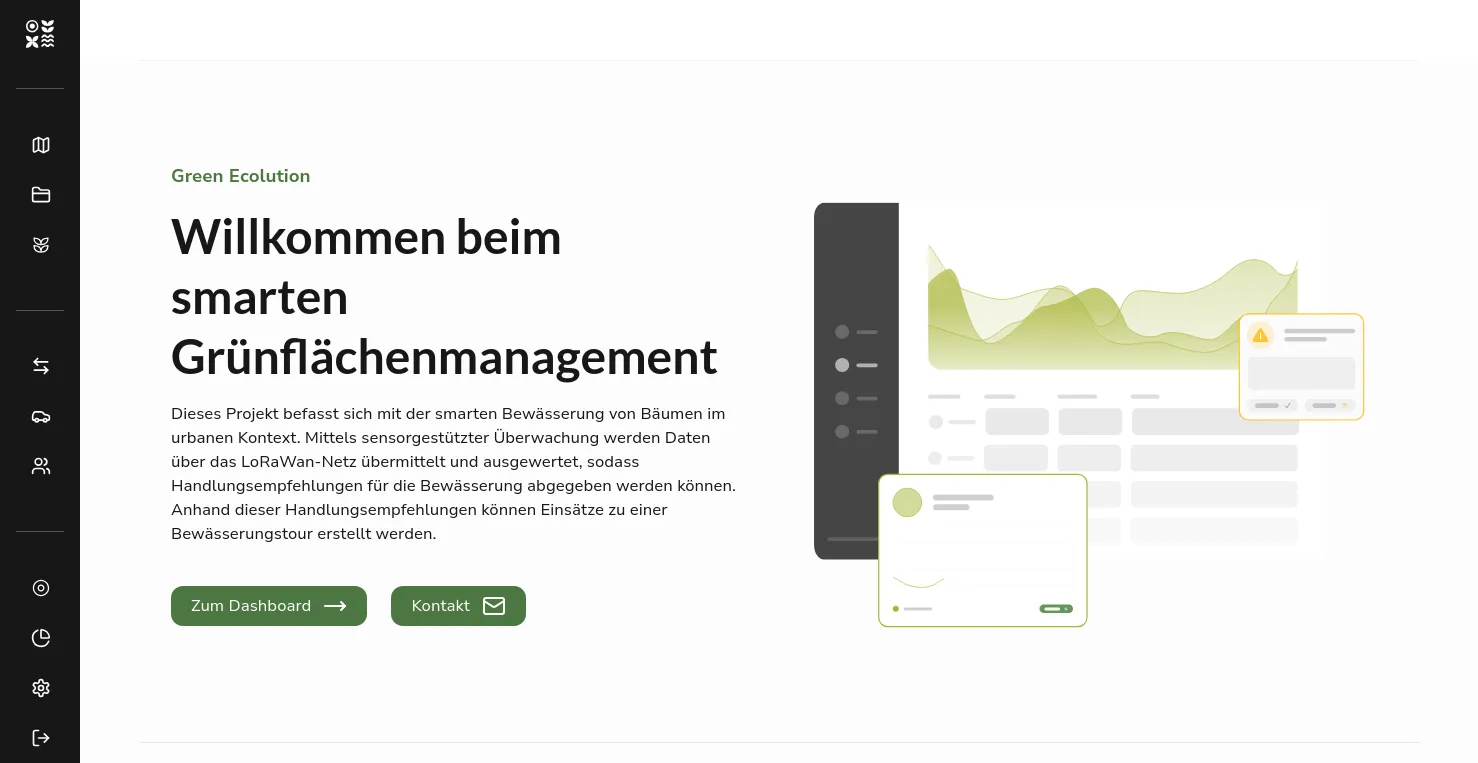
All key KPIs at a glance: soil moisture values, upcoming tours, team availability and vehicle status in one central dashboard.
Group trees into irrigation units. Automatic calculation of water demand per cluster.
Manage vans and trailers with water capacities. Automatic refill stops in route planning.
Optimized irrigation schedules with real-time status: from “planned” through “active” to “completed”.
How the route optimisation worksManage drivers by license class and availability. Optimize deployment planning.
Document actual water consumption per cluster and tour. Analyze trends and optimize future planning based on data.
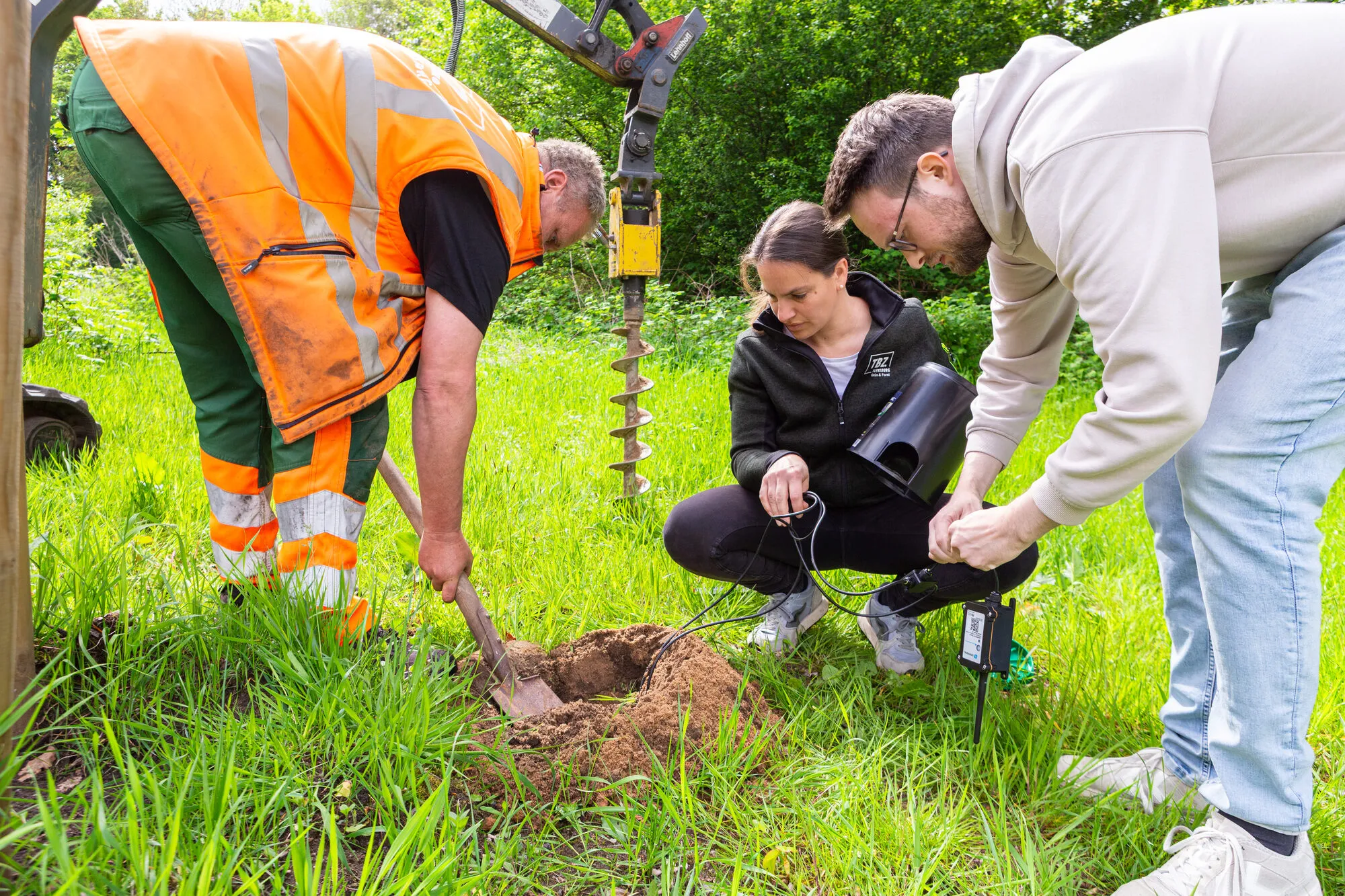
Designed for use in public spaces. The probe measures at variable depths and so maps the root profile of a tree, from the near-surface fine roots to the deeper main roots. This makes it possible to see whether water actually reaches the root zone or only wets the surface. Installation is flush with the ground using standard soil augers, and maintenance work such as mowing is not affected.
The probe is one possible sensor, not the only one. The platform is built so that other sensors can be connected as well with some development work.
You get the probes directly from us, and your team can install them itself.
Volumetric measurement of soil moisture at multiple depths
Measurement of soil temperature for precise irrigation recommendations

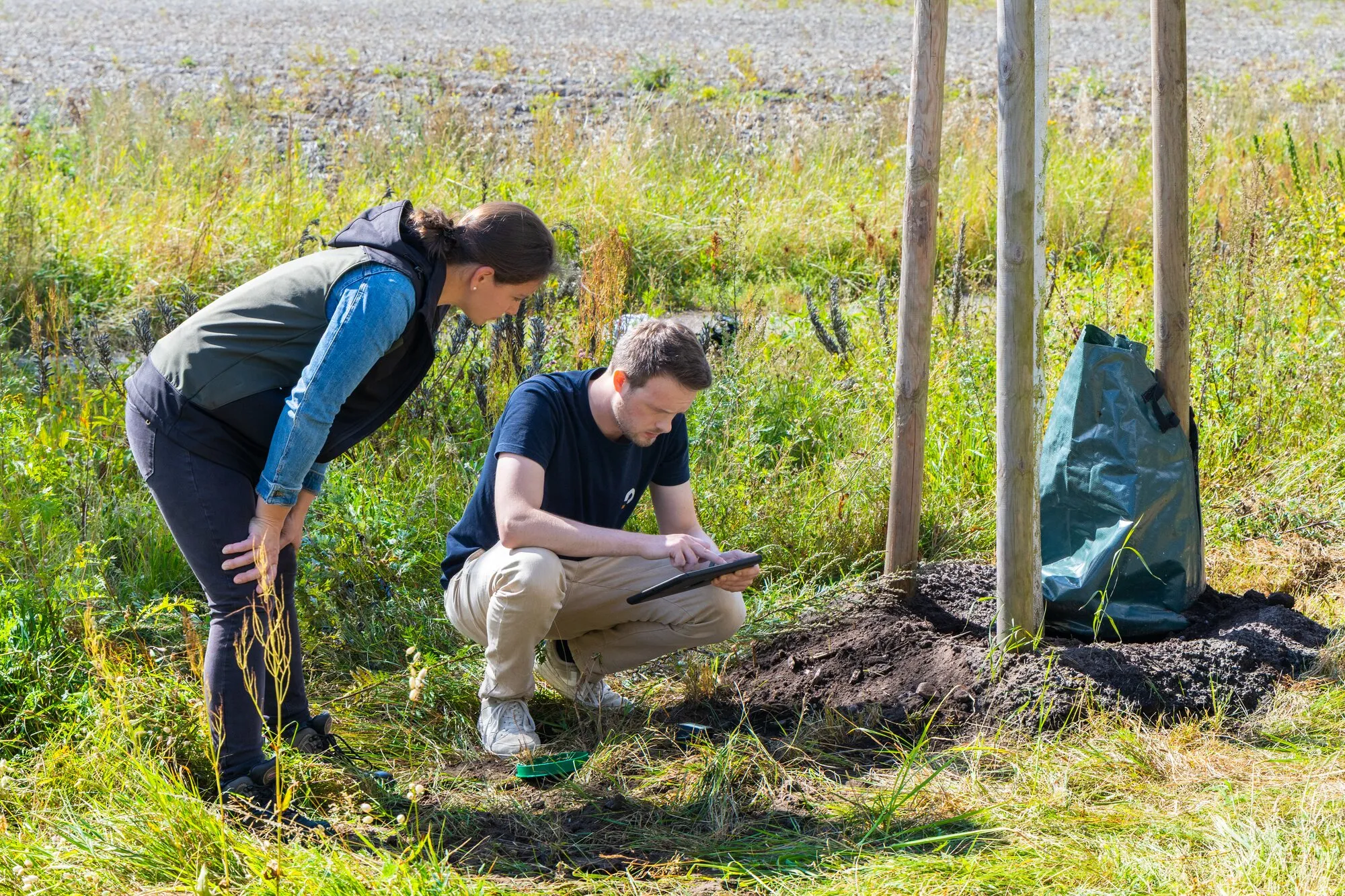
Soil moisture sensors capture soil moisture and temperature at variable depths. The data is transmitted energy-efficiently via LoRaWAN.
A traffic-light system shows the current irrigation need on a map. Staff can see at a glance which green spaces need water. Time series enable detailed analyses.
Automated dispatch and route planning generates optimized irrigation routes, taking into account water capacity, vehicle size, and road restrictions.
In the end it comes down to the run. The route is settled before the vehicle leaves: which sites need water, how much has to be carried and in what order they are visited. Instead of a blanket round, it follows what the sensors in the ground have measured.

“I can already tell how much work the system takes off my hands. I can see at a glance where watering is really needed, and we drive straight there. In the past, watering tied up so much time in summer that other work was left undone. Now we can finally get to it.”
Green Ecolution is built for municipal operations. The benefit differs depending on the role.
Decisions about water, staff and vehicles rest on measurements instead of experience. Consumption and operations are documented per area and per tour, and can therefore be evidenced.
Schedules and tours are generated instead of assembled by hand. The fleet, the teams and the review of actual consumption all live in one place.
The tour can be viewed in the app and can also be transferred to the navigation device in the vehicle. A traffic-light system on the map shows which trees and groups need water.
We run the platform, and where preferred inside the municipality's own Kubernetes cluster. Open interfaces, a plug-in system and open source keep the data and the control in house.

This is what it looks like day to day. The person watering sees what the site needs at the tree. The person planning sees it at their desk. Both work from the same data.
What you need for itEveryone else benefits indirectly: healthy urban trees cool the city climate and support biodiversity.
From us you get the software, the sensors, the setup and the operation. The software is open source and free of licence fees; you pay for probes and services.
Platform with map, dashboard, scheduling and app, open source and free of licence fees.
Soil probes for public spaces that your team can install itself.
Setup, data import and onboarding for your organisation.
Operation with updates, backups and support.
The publicly accessible demo instance shows the current feature set: map view with a traffic-light system, dashboard with sensor data, and automated route calculation. No installation needed, directly in the browser.

Two films show what we are working on: the State of Schleswig-Holstein's video on our Digitalisierungspreis 2026 award and the television piece public broadcaster NDR filmed about the project.

Green Ecolution received the Green Coding special prize at the State of Schleswig-Holstein's Digitalisierungspreis 2026. The state's video introduces the project and the open source solution for needs-based irrigation. It is in German.
Land Schleswig-Holstein | Digitalisierungspreis 2026

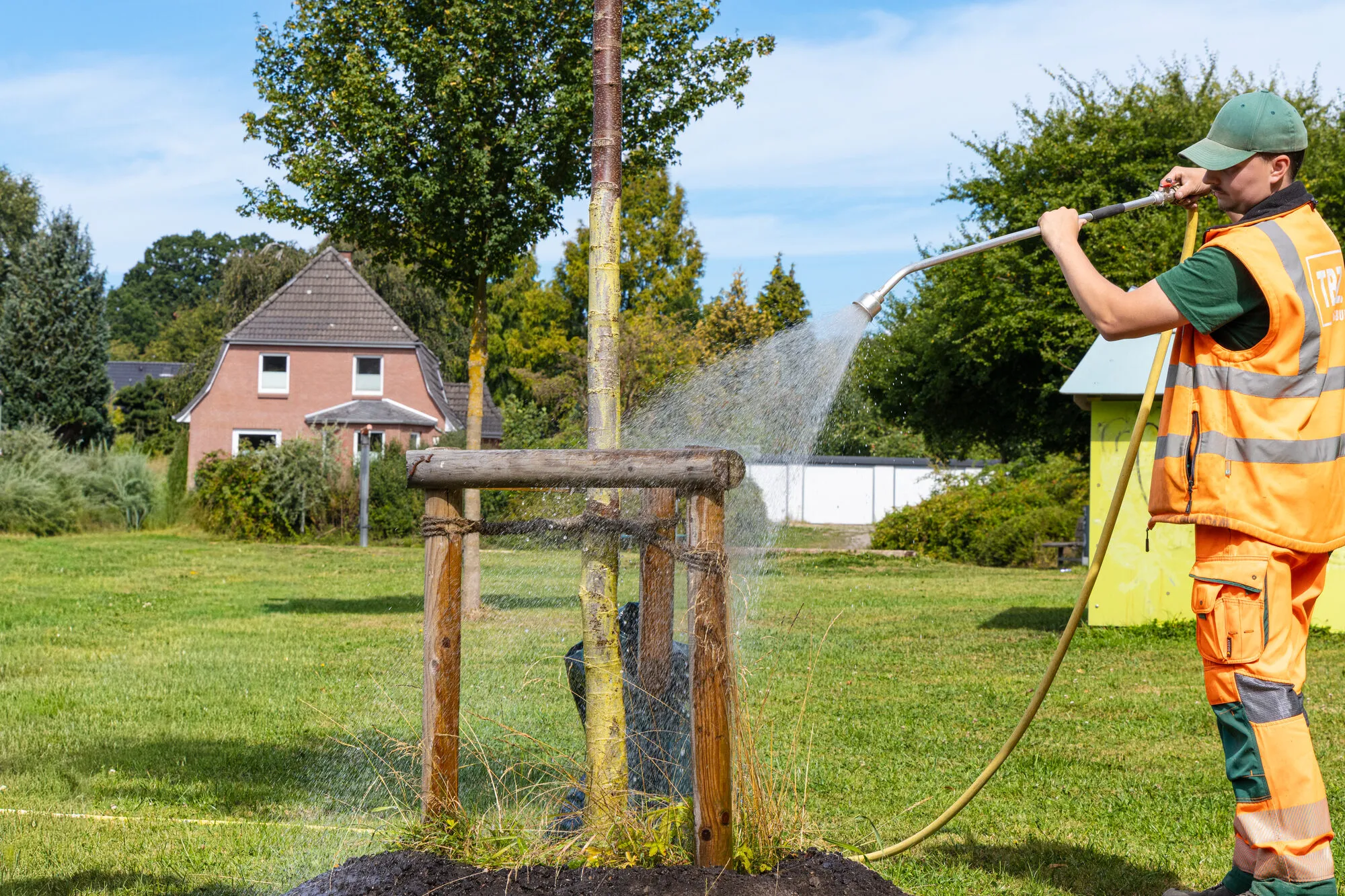
In August 2026 the Schleswig-Holstein Magazin reported on urban trees that no longer survive the dry summers and spent a morning filming in Flensburg. The piece shows a soil moisture sensor going into the ground and how the city's technical operations centre plans the next watering run from its readings. It is in German.
NDR SH | Schleswig-Holstein Magazin | 29.08.2026
We continuously develop Green Ecolution further. Take a look at the latest features and find out what we're currently working on.
Green Ecolution grew out of a collaboration, and these partners helped launch the platform. We founded the company together with PROGEEK Group.
More about usGreen Ecolution is a company based in Flensburg. Cedrik Hoffmann founded it together with PROGEEK Group and runs it as managing director.
It began with a question from the City of Flensburg, which turned to Smarte Grenzregion with it. That became a master's project in Applied Computer Science at Flensburg University of Applied Sciences, together with the municipal service centre of Flensburg. In user tests with the service centre the application scored an above-average usability rating and was described as clear and manageable even by staff without an IT background.
We founded the company so that municipalities can use the solution in their daily work. You can find more on the About us page.
Green Ecolution makes the watering of urban trees traceable. Sensor data shows which areas need water, and the scheduling turns that into tours without unnecessary trips. Watering this deliberately saves water, fuel and staff time, and decisions rest on measurements instead of experience.
For municipalities that means missing water becomes visible earlier, consumption is documented, and the solution can be operated in-house and developed further together, without being tied to a single vendor.
For scheduling and route planning, the locations of the trees and areas, the vehicles you already have with their water capacities and the refill points across the city are enough. Sensors are not a prerequisite for this; they improve the prioritisation. Once probes are added they need a radio link: LoRaWAN today, or NB-IoT with a SIM card as an alternative.
Which data and which infrastructure are needed in detail is set out under the requirements on the product page.
Three things, in practical terms. You can read and have audited what the system does with your data. There are no licence fees. And you are not tied to a vendor: the source code is public on GitHub and stays with the municipality even if it decides differently later.
Setup, operation and support are ours to handle. Open means you could do it yourself, not that you have to.
No. The platform is modular, and our soil probe is one possible sensor, not the only one. Sensors from other manufacturers can be connected through The Things Network and the plug-in system. A new sensor type needs some development work, which we take care of. Connecting third-party sensors has not been proven in the field so far.
The soil probe we supply is built for public spaces and measures at variable depths. In the research project it contained a Watermark sensor for soil water tension and an SMT100 sensor for soil moisture and temperature. Today a series-produced model sits in the ground instead of the research prototype.
The software itself costs nothing; it is open source and free of licence fees. You pay for the probes, which you buy once, for the setup and, if we operate the platform for you, for the ongoing operation.
How this adds up is set out in the pricing model on the services page. We prepare a specific quote after an initial conversation.
Do you have questions, feedback, or a request? We welcome your message and will get back to you as soon as possible.